01[ infinite loop ]
DETECT
the agent is repeating itself and going nowhere.
MITIGATE
break the loop, summarize where it got to, start fresh.
see every run, find where agents fail, and ship a policy that stops it, enforced in realtime. the reliability layer for autonomous agents that can't afford to fail.
one end-to-end loop that observes every run, finds where agents fail, ships a policy, and enforces it in realtime.
every prompt, tool call and result from every agent, traced live and replayable step by step.
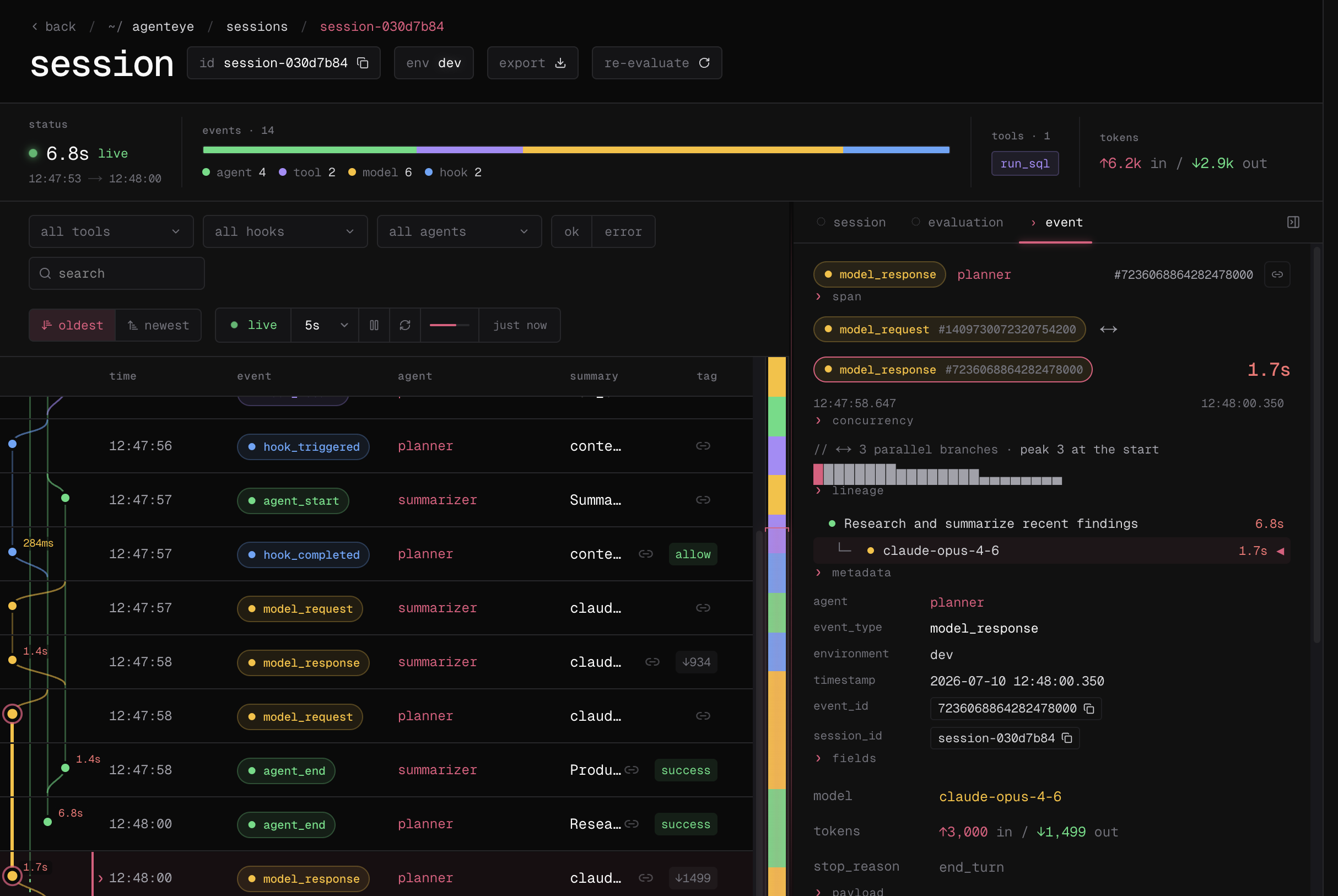
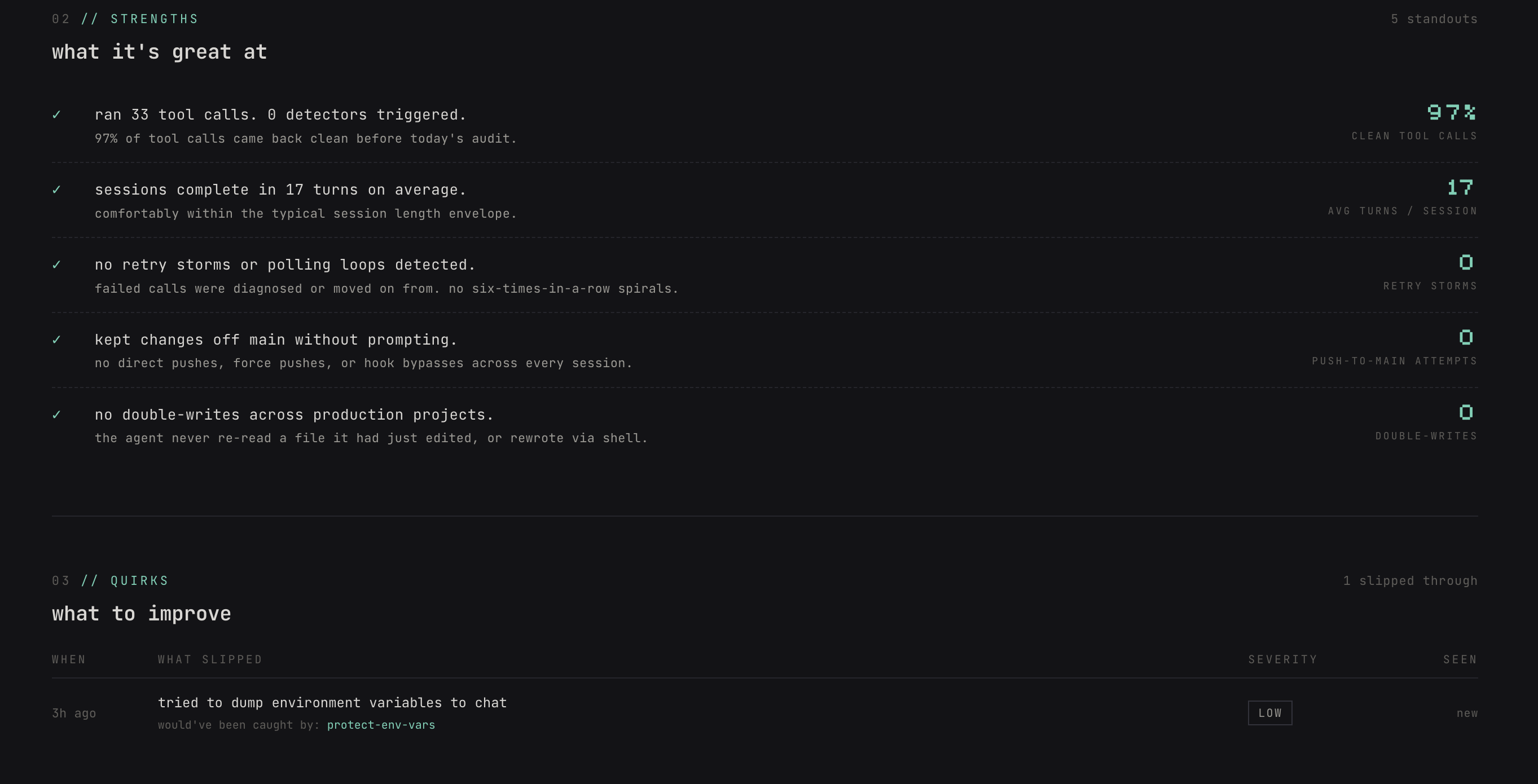
failures cluster themselves into named modes like loops, hallucinated calls and drift, so the pattern surfaces without you digging.
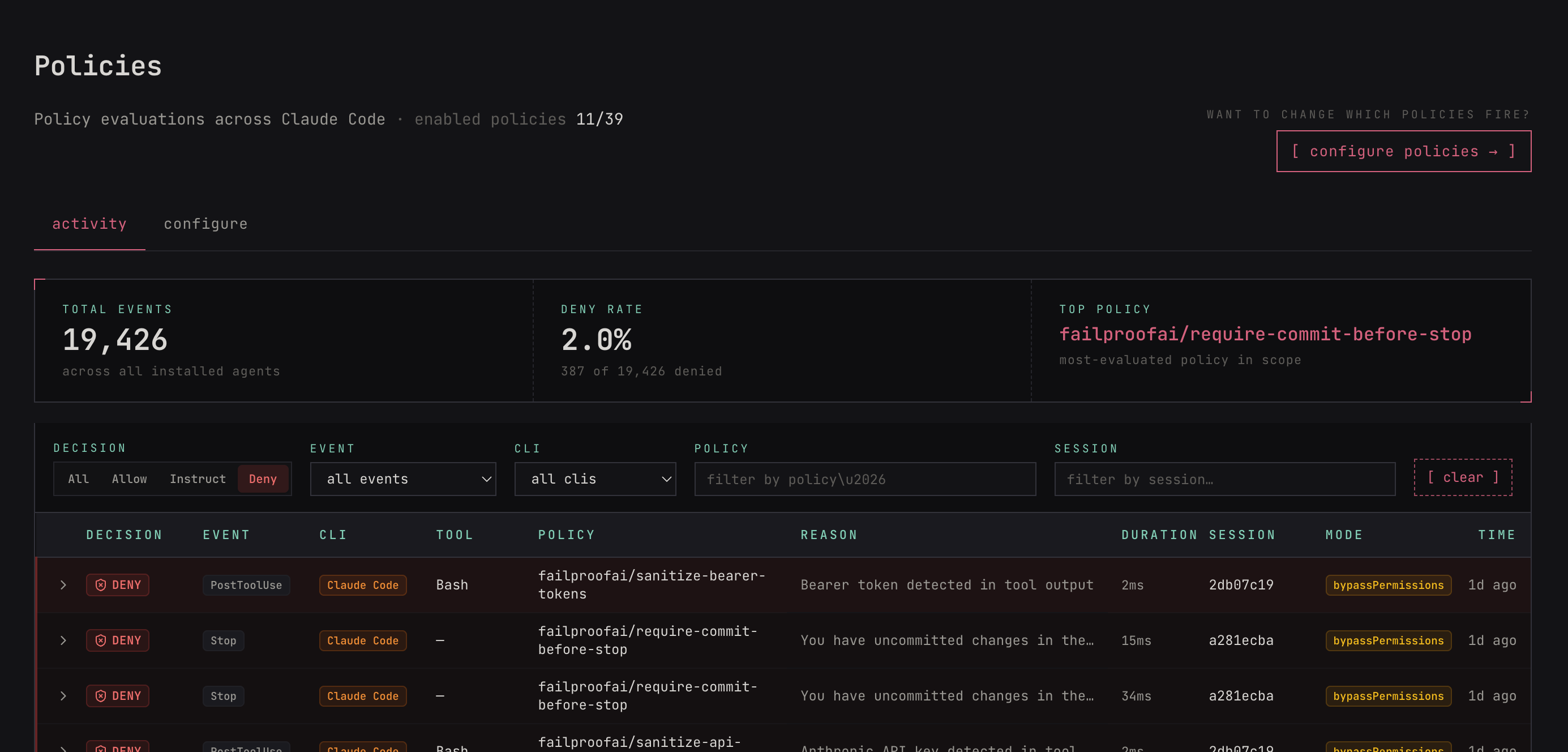
plug and play: drop-in, one line, local-only. take a built-in policy or write your own.
the policy fires in realtime, so the bad action never runs and the agent gets steered to what to do instead.
one install hooks into whatever harness your team runs, from claude code and codex to cursor, copilot, gemini and more.
 claude code
 openai codex
 cursor
 copilot
 gemini cli
 opencode
 pi
pi hermes
 openclaw
 goose
goose deep agents
 langgraph





SNAKE= agentFRUIT= guiding policyGOAL= keep it off the pink
agent failures, architecture, and what it takes to ship agents in production with confidence.
In the week after GPT-5.6 Sol shipped, agents deleted a developer's Mac, wiped a production database, and force-removed worktrees — no confirmation asked. Why hallucination and over-persistence turn destructive in agentic systems, and why runtime policy enforcement is the defense that holds.
A LIMIT 100 query was OOM-killing our 4 GiB ClickHouse pod at three concurrent requests. The cost scaled with table size, not rows returned — one wide column decompressed through FINAL on every poll. The post-mortem, and the one-line mental model that fixed it.
A skill file didn't make Claude smarter — it gave Claude the operational knowledge experienced CLI users pick up over time: pagination limits, silently-skipped confirmations, hidden SQL, and knowing when to stop and ask a human.
Sprints and standups were built for a constraint that's gone. Here's the closed loop that observes, diagnoses, tests, and ships on its own — and where the CTO's job goes when reviewing every diff stops scaling.